

Baroque meets Oriental Traditions: Znojmo and the Jews
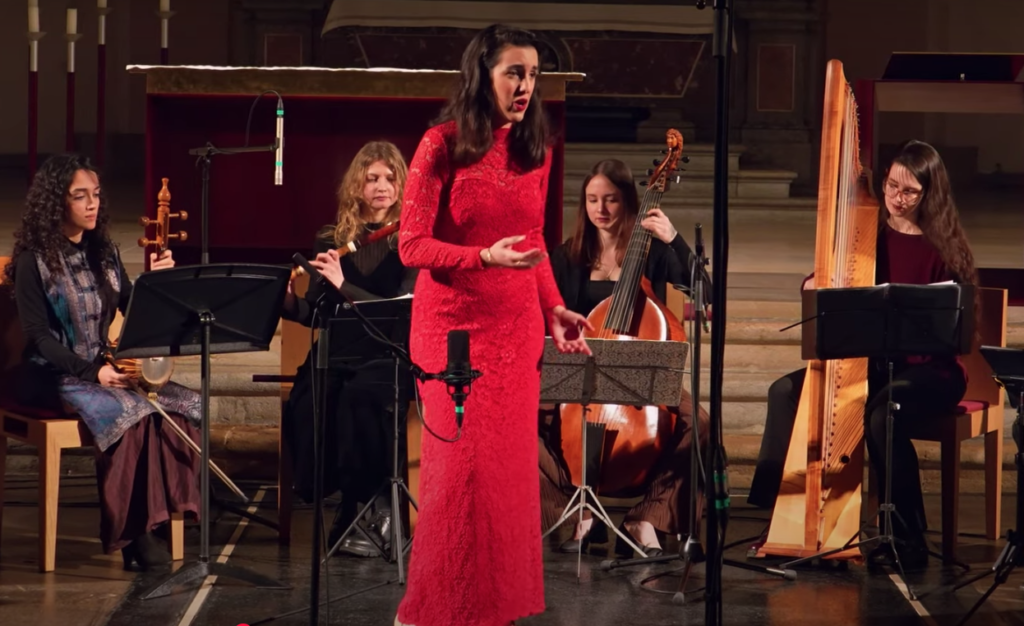
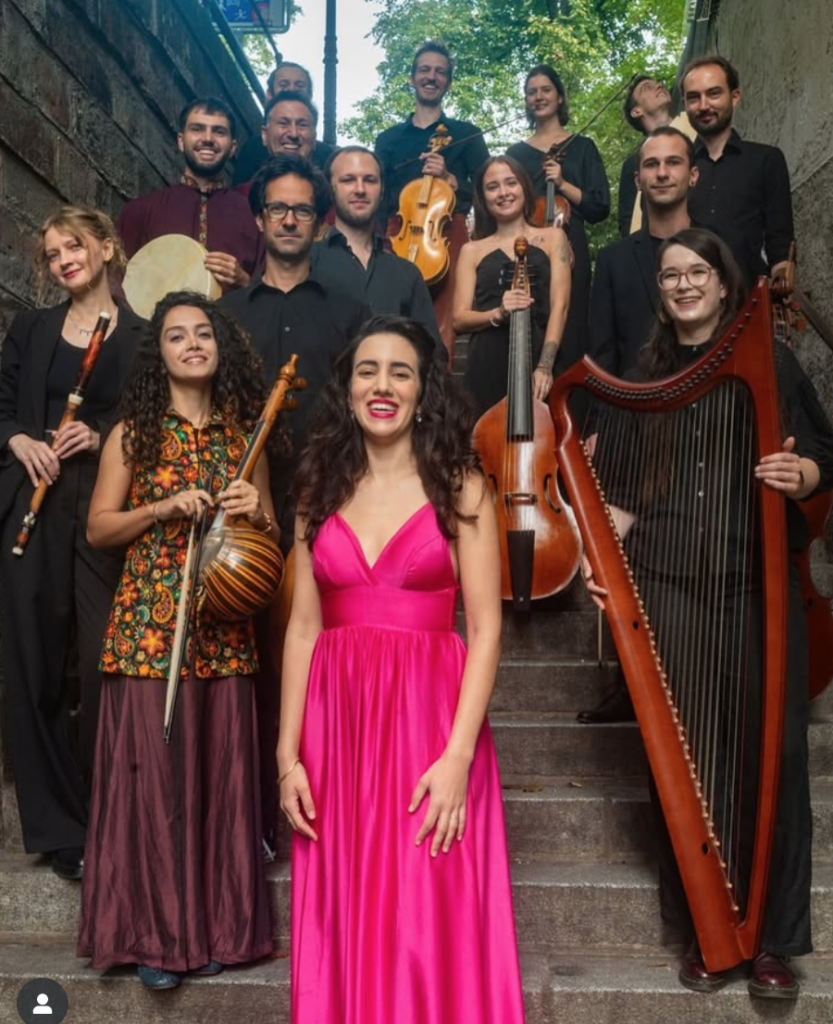
A vibrant musical journey uniting Western and Eastern musical traditions. This concert weaves the European Baroque style together with the rich tapestry of oriental melodies and rhythms known from the Middle East, the Mediterranean, and the Balkans. Performed by mezzo-soprano Maya Amir and the eight-member ensemble Avventura Barroca, the program ranges from Monteverdi to Vivaldi, alongside traditional Sephardic and Arabic songs, Ottoman court music, and various folk motifs.
The Church of St. Michael is located in the area of the former Jewish quarter, which once stretched mainly along Veselá Street and formed an important part of Znojmo. Its history is closely tied to the Jewish community that lived here for centuries. The concert thus becomes a tribute and a remembrance of the Jewish inhabitants of Znojmo, who throughout the city’s history endured repeated injustices and hardships.
Event description
A special attraction is the unusual combination of instruments—European lutes and the Oriental oud—which creates a unique sound world that transcends the boundaries of eras and continents. The concert shows that despite their different roots, music shares a common language of emotion, beauty, and understanding.
Maya Amir & Avventura Barroca
Maya Amir – Mezzosoprano and artistic director
Pouya Khoshravesh – Kamancheh
Eren Can Erol – Oud
Emre Can Erol – Quanun
Noam Lelior Gal – Violin
Darina Ablogina – Historical Transverse Flute
Ana Marija Krajnc – Cembalo/Harpsichord
Beatriz Lopez Paz – Viola da Gamba
Diego Chacón Gámez – Theorbo & Baroque Guitar
Yaşar Coşkun – Percussion
Performers
Maya
Amir
Maya Amir

Avventura
Barocca
Avventura Barocca
Program
Salomone Rossi (1570-1630)
HaShirim Asher Li-Shlomo (The Songs of Solomon) (Venice, 1622)
“Barechu” (Blessed is the Lord, who is blessed for all eternity)
“Shir Hama’alot“ (Blessed is everyone that feareth the Lord)
Barbara Strozzi (1619-1677)
Op. 8, “Che si può fare” (Mantua, 1664)
Jean Baptiste Lully (1632-1687)
Le Bourgeois Gentilhomme (Paris, 1670)
Chaconne des Scaramouches
Elam Rotem
Song of Songs 2:1-5, “Ani chavatselet haSharon” (I am the Rose of Sharon) (Basel, 2013)
Cemil Bey (1871-1916)
Oyun havasi in Makam Hüseynî: “Çeçen Kızı” (Late Ottoman period, 18th–19th century)
Jean Baptiste Lully (1632-1687)
Le Bourgeois Gentilhomme (Paris, 1670)
Marche pour la Cérémonie des Turcs
Antonio Vivaldi (1678-1741)
In furore iustissimae irae, RV 626 (Rome, 1720-1725)
Arrangement: Alon Ohana, Leat Sabbah, Maya Amir
- In furore iustissimae irae – Allegro
Recitativo: Miserationum Pater piissime
- Tunc meus fletus evadet laetus – Largo (Drwas imaginary from Psalm
126:5: “They who sow in tears shall reap with songs of joy.”)
- Alleluia – Allegro
***Intermission***
Traditional Ladino
“Yo m‘enamori d‘un aire” (Unknown)
- F. Telemann (1681-1767)
Nouveaux Quatuors (Paris Quartets, 1738)
Prelude
Gracieusement
Cristiano Giuseppe Lidarti (1730-1793)
Ester Oratorio (Amsterdam, 1774)
Act III, scene 2, no. 25, Recitative and Aria of Ahasveros: “Anshey sod, tifsi Haman… Hon va`Osher hu yikne”
- F. Telemann (1681-1767)
Nouveaux Quatuors (Paris Quartets, 1738)
Modéré
Andon Efendi ( ? – 1925)
“Hicâz Mandira” (Turkey)
Traditional Ladino
“Los guisados de la Berenjena” (Rhodes)
Aviva Amir
Night on the Waters (Israel, 2015)
“Chambers”
“Aneni” (Oh Lord, Hear Me)
Anchor:
“Maim Haim” (The Fountain of Living Waters)

